Prattle & Jaw

Two blogs about a whole lot of nothing

Filtering by Tag: Creativity

Hard is good. Even if it feels bad

“Blog post about the journey in writing not the final output and in creatives and why AI robs us of that journey.”

This was my note to myself, and, like so many other notes about writing blog posts, I thought it would get moved along my calendar, day by day, week by week, until at some point I faced facts: I will not write this blog post.

"The only real mistake is the one from which we learn nothing." – John Dewey

But not this time. Oh no. Today, I have had enough of actual work, and instead, I will turn my rather frazzled brain to this document, so good luck, dear reader. I have no idea how this will go. 

Of course, what I could do is simply open up ChatGPT and plug in all the things I want to talk about and boom, there’s my blog post. But that’s kind of what this post is about. In fact, it’s not kind of, it is. It’s about the journey. Man. Not the destination. 

OK, where to start? Let’s see. 

"I have not failed. I've just found 10,000 ways that won't work." – Thomas Edison.

There we go.

It took me a while to warm up to LLMs. ChatGPT, in particular. What got me hooked was when I had to go through pages upon pages of full names, email addresses and company names and put them all into columns in a spreadsheet, but the original document was a PDF, and when I tried to copy/paste them, all hell broke loose. Eventually, I threw it into ChatGPT and asked it to do it for me and lo and behold, it did. It took moments to do something that would have taken me a couple of hours to do. I was converted. And that’s how easy I am. 

"Failure should be our teacher, not our undertaker. Failure is delay, not defeat." – Denis Waitley 

This is the kind of task I want technology for. You know that quote by Joanna Maciejewska;

“I want AI to do my laundry and dishes so that I can do art and writing, not for AI to do my art and writing so that I can do my laundry and dishes.”

A-freaking-men. 

But then, you know, you’re sat there staring at a blank page and you have to be CrEaTiVE and you can’t be, you just can’t be. So you crack open that tab and ask ChatGPT to give you just a little nudge in the right direction.

Juuuuust a little one. 

It’s a slippery slope. 

“Very few people want to actually do the work. They want the benefits of having done the work. But the work is the work. It is non-transferable.” – Jess Wheeler

The next thing you know, we’re skipping all the “hard” stuff. But the hard stuff, especially when any kind of creativity is involved, is where the good stuff is. I mean, there’s a reason for shower thoughts. For that proven method of stopping what you’re doing and getting outside and then BOOM. It hits you. And that’s it. That’s what works. What sells. Whatever you’re trying to do, that’s when the good stuff comes. 

It’s not going to come from a prompt. 

"Failure is the opportunity to begin again, this time more intelligently." – Henry Ford 

But we’re outsourcing all of this to ChatGPT, asking it to summarise entire books we haven’t read (and haven’t paid for), brainstorm ideas we haven’t thought through, and generate insights we haven’t earned. We’re basically middle managers of our own creative lives, delegating away the mess, the frustration, and – crucially – what comes with that; the growth. But we’ve labelled it efficiency, and who doesn’t like efficiency? 

Except … doing the work is the point, people. 

We’re cheating ourselves. We’re robbing ourselves of everything that comes with the hard stuff. Jesus, I mean, it’s a lesson we’ve been taught all our lives and teach our children; you work at something, you get better at it. You cheat? Not so much. 

I know it’s so very, very tempting to treat the final product, whether it’s a presentation, a marketing campaign, or a blog post, as the thing that matters most. But as Ann Handley writes so succinctly:

“The process of creating something is where the meaning lives. It’s not the thing, it’s the making of the thing.”

If you skip the doubt, the dead ends and the frustration, you also skip the part where you learn something. Because the real value of a project isn’t in the polished deliverable – it’s in the effort it took to get there. That’s where you grow. That’s where you develop taste, judgment, and discernment. It’s where you build your voice.

You can’t automate becoming good. You’ve probably seen that recent MIT study suggesting that relying heavily on ChatGPT for writing tasks can lead to a decline in cognitive engagement and memory, potentially creating "cognitive debt" where users struggle to perform tasks independently after relying on AI.

Doesn’t that just terrify you? It terrifies me. So much about this day and age makes me think of the humans in Wall-E. 
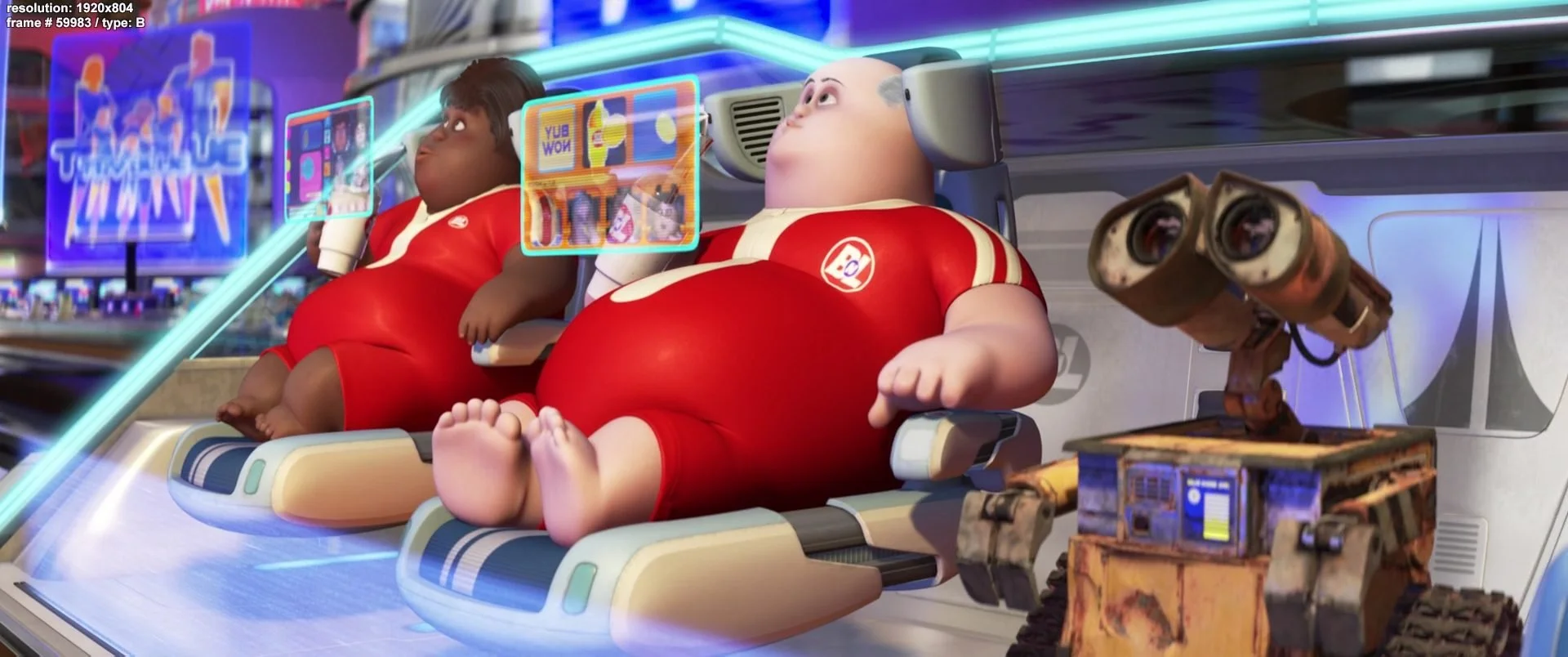
I read this newsletter (which you should really subscribe to) about embracing restrictions by Jess Wheeler, and this is what I’m going to think about every time I’m tempted to skip the hard stuff.

“Sometimes your best fighting is done when backed into a corner.”

Often, those very restrictions so easy to loath are what forces us to be creative. Creative solutions never came from anything easy. We need the pressing deadline. We need the blank page. We need the “Fuck this, I’m going for a walk” because, segue back to the top; that’s where the good shit happens. I like this quote Jess included:

"The enemy of art is the absence of limitations.” – Orson Welles

When technology rids us of all limitations, do we really get more creative – or do we all just end up in a bland soup of mediocrity? It’s the latter, and I’ll die on that hill. For now. 

Aside: This is a whole other blog post, isn’t it. Are we all succumbing to the Great Blanding because of AI? 

I think you get the gist of this ramble by now. 

If you’re working on something important – something that matters to you – maybe don’t skip the part where it’s hard. That’s the part that makes it yours. That’s the part where you learn. And that’s the part that makes it all worth it.

Now I have to go and think of what image to use for this blog post, which I already know is going to be a bloody nightmare.

Oh wait, I just had an idea. Thank God.

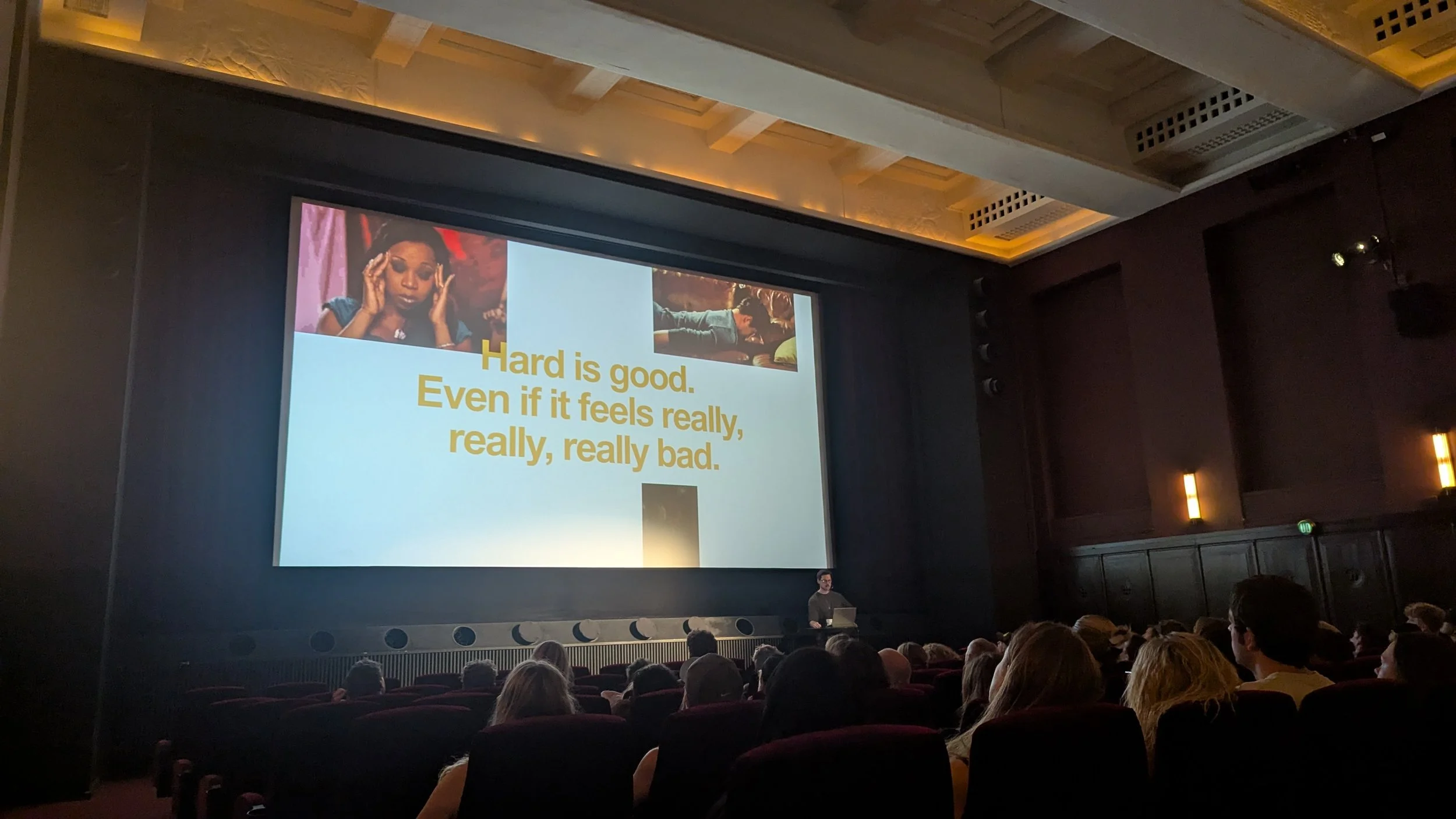
Edit: I’ve snuck in this photo I took of Christopher Keatinge giving a talk on OOH. This sums up this blog post nicely. The original image was the Wall-E one up there.
Everything sucks but it doesn't have to

If you pay attention to my LinkedIn profile, which I’m sure you do, you would have seen that I recently read Lemon, by Orlando Wood, Chief Innovation Officer of System1 Group and member of the IPA Effectiveness Advisory Board. I wish I had read it in tandem with someone in the same room so I could say ‘YES!’ and ‘LOOK!’ and generally annoy with them with my exclamations.

Read it, and you’ll see what I mean. No matter if you’re designing social ads, OOH ads, approving creatives or sitting in C-level wondering how to make those numbers look good, you’ll wish you had read it earlier. 

And now is the ideal time to read it. It fits perfectly with the current conversations that seem to be inundating my feed about the sorry state of marketing. You know, those ones about how we’ve got to start focusing on long-term initiatives. About how we’ve got to get back to being truly creative – and give ourselves space and time to be creative. About how we’ve got to stop pouring over dashboards and analytics because everyone knows it’s nonsense, and anyway, it’s going away soon.

It feels as if we’re teetering on the edge of change, perhaps brought about by a perfect storm of disillusionment with the industry as a whole, the enshittification of everything, the realisation that long term is just as (if not more) important than short term, and the realisation that oh crap yeah it’s this year cookies are going away. Add to all that the shit show and aftermath of a global pandemic, and a major shift doesn’t seem too far off.

I don’t know. There’s a chance I’m spending too long on LinkedIn, bouncing around my little echo chamber, but the optimist in me likes to think that maybe this general dissatisfaction and these debates around long vs short based on cold hard data are the first indications that we’re moving back into what Orlando Wood dubs a right-brain period. I want to believe that, at the very least, this year, we’ll see a rise in creativity and a pushback against short-terminism.

Lend me your jelly orbs for a bit longer, and allow me to attempt to elucidate.

Honestly, I’m not sure if I can, but I’ll give it a go, and we’ll see where we end up. Good luck.

The right brain, the left brain and mosaics

I know, mosaics. It’s a weird place to start but bear with me.

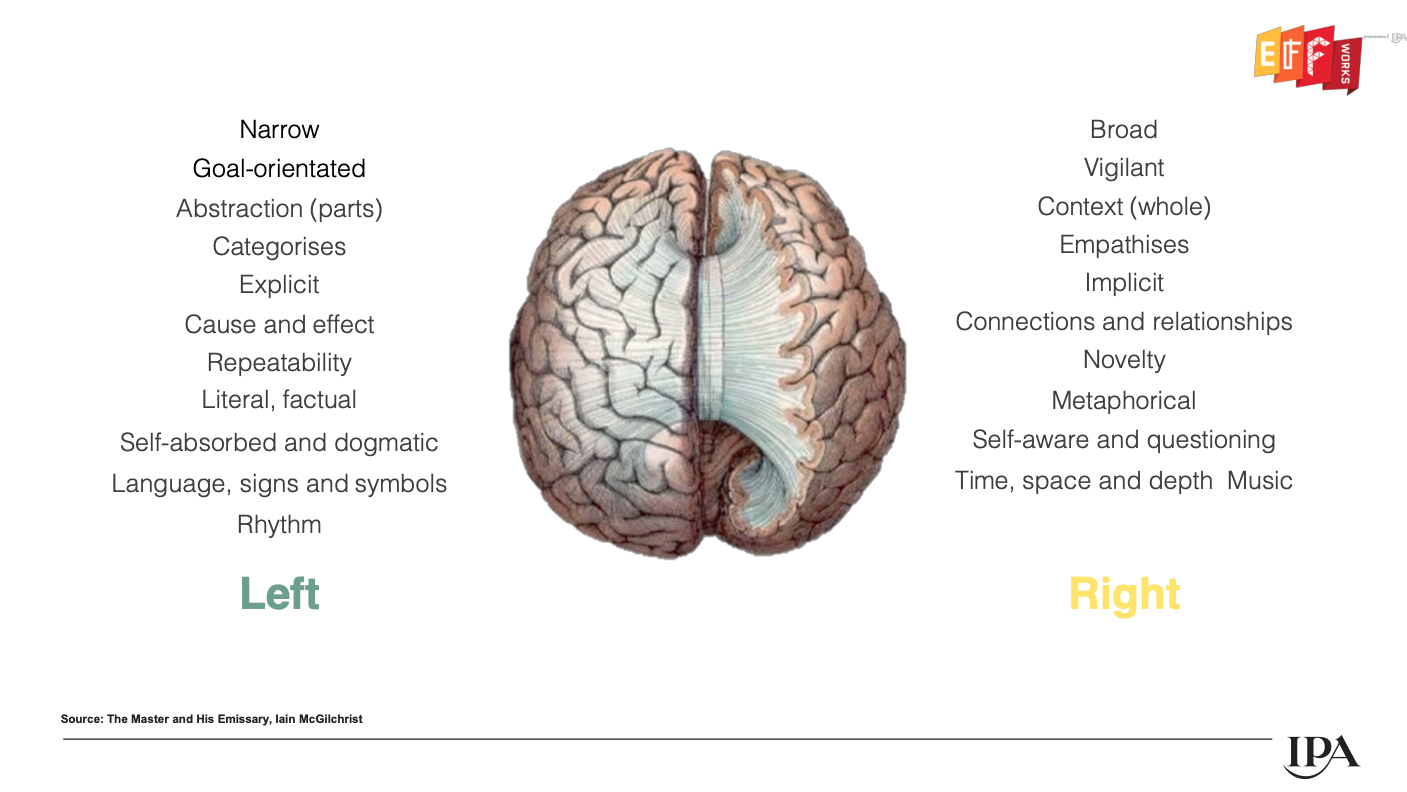
In Lemon, we’re introduced to Iain McGilchrist and his work on brain lateralisation – the science of the right and left brain.

Our brain is split into two hemispheres. Each works in its own special way and has its own take on its surroundings.

The left brain is short-term. It’s instant. It’s factual. It wants simple words superimposed over a fast-moving montage of expressionless, generic people saying nothing, photographed next to a bit of whatever it is you’re trying to sell. It’s in-your-face obvious and does not entertain. 

The right brain is long-term. It understands context. Cultural references. Humour. Implicit emotions. Accents and the plethora of unspoken somethings they contain and communicate. It’s wordplay and a blink-and-you’ll-miss-it look. It’s entertaining and makes you think. 

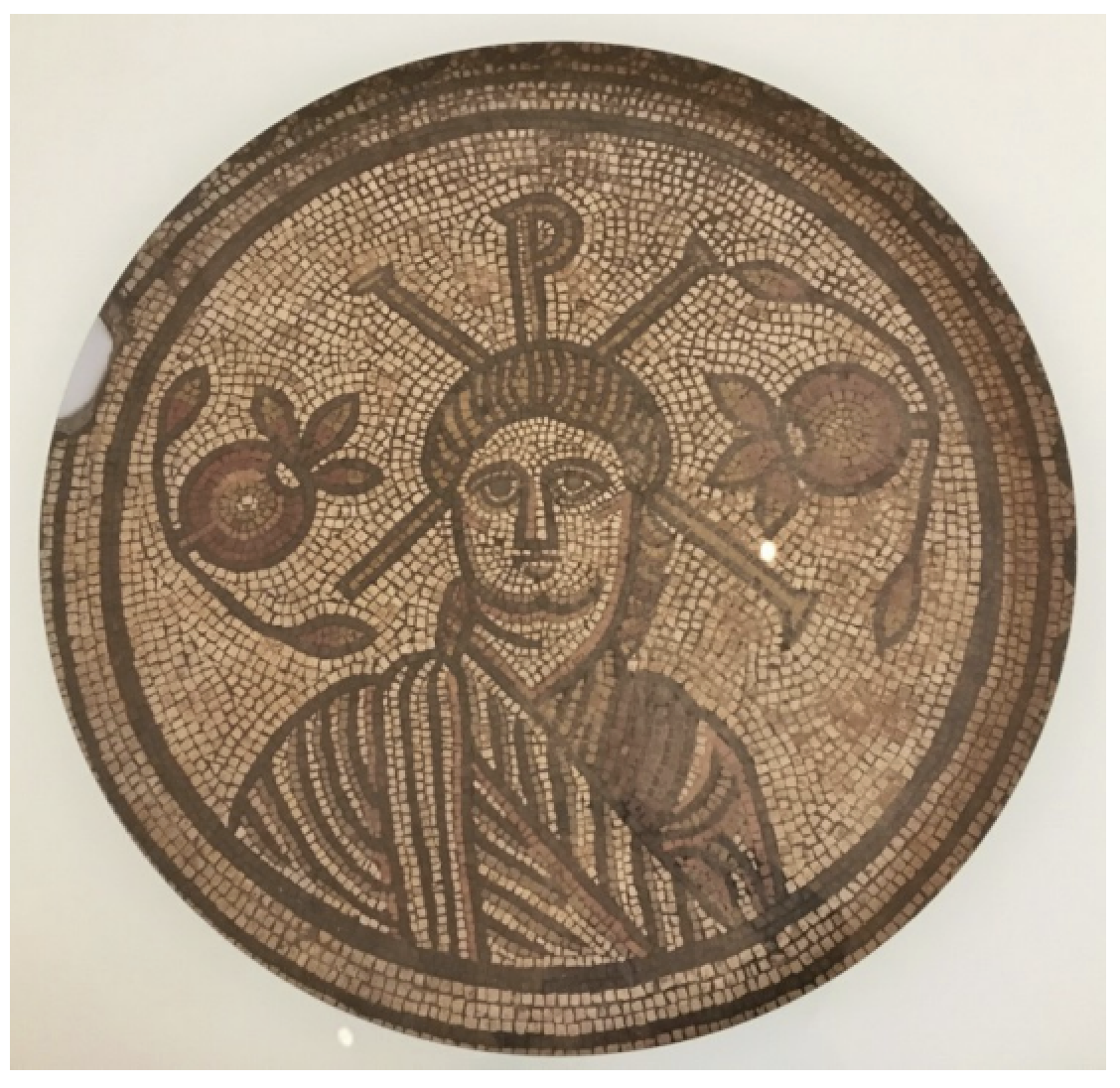
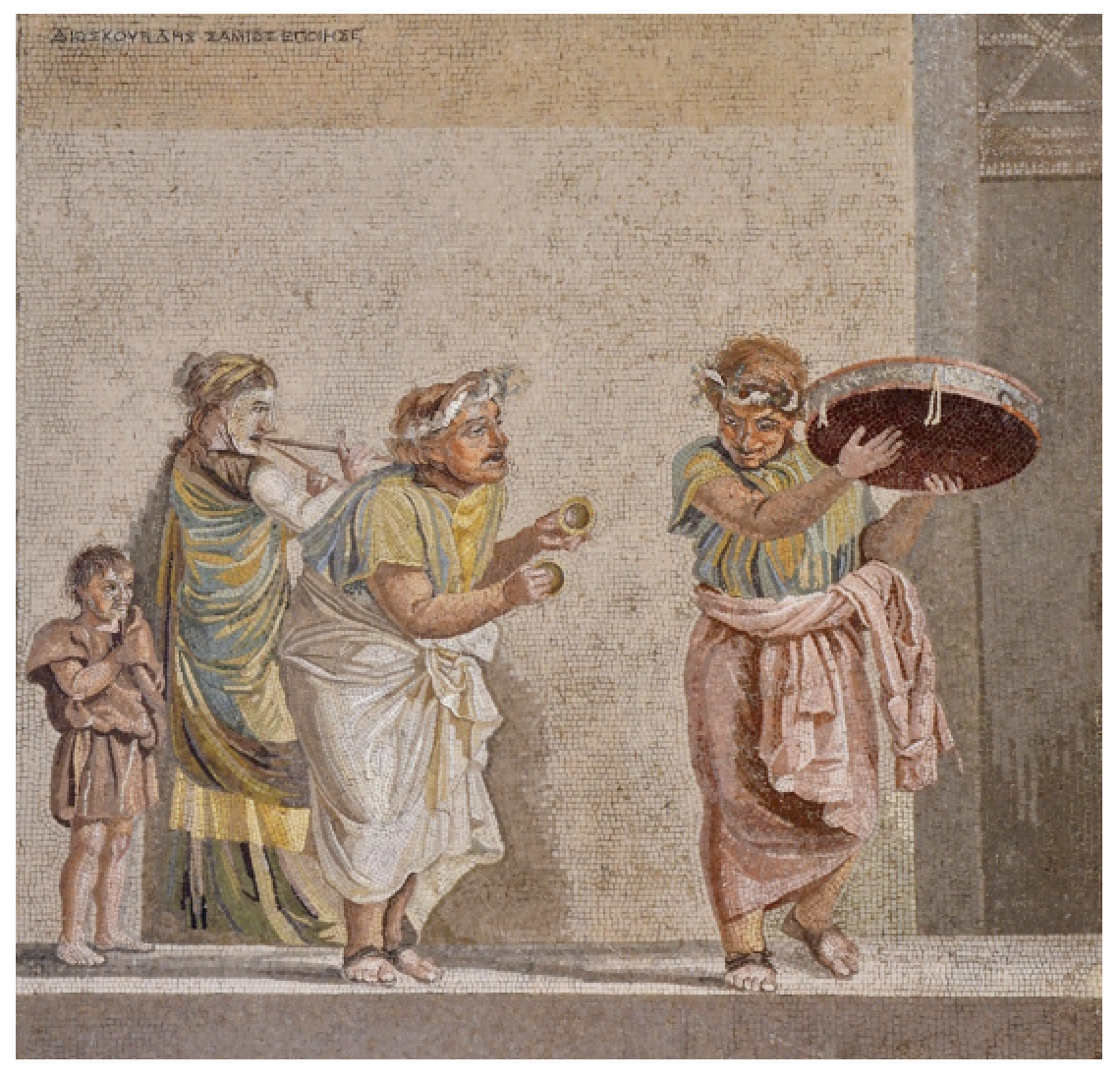
Now, look at these mosaics (stolen from Lemon). 

One (left: the Image of Christ, 4th Century A.D.) is flat, restricted, emotionless and featureless. Where are we? No idea. What’s going on? Who knows, and who cares? This would be a left-brain mosaic.

The other (right: scene from New Comedy, late 2nd Century or beginning of 1st Century B.C.) contains subtle nuances, emotions, movement and details. It puts us in the moment and provides perspective and depth. This is a right-brain mosaic.

Essentially (grossly oversimplifying things), these two mosaics represent art history. 

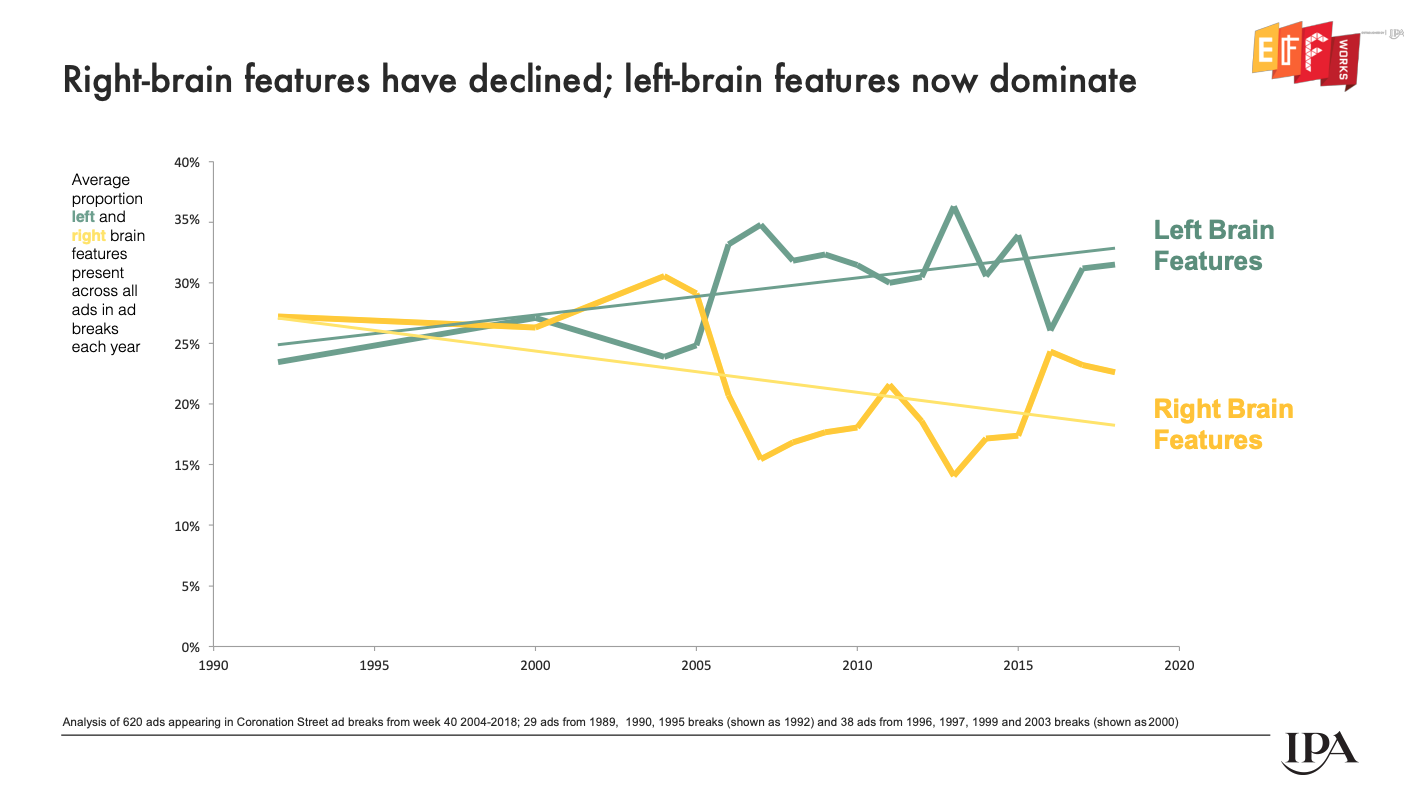
We swing from the right brain to the left brain and back again (Renaissance to Reformation, Baroque to Classicism, and so on). Society, religion, government – everything plays its part in this oscillation, and right now, we’re firmly in left brain territory, having left a period of right brain…ness around 2006. We’re stuck in a world of saying hello, having a moment, finding our something and instantly forgettable ads.

So how on earth did we get here? According to Lemon, it’s the inevitable swing of the pendulum thanks to global events, politics, cultural shifts and, in a starring role, social media. And with the latter, I would wholeheartedly agree.

The short-term, quick-fix obsession

From the moment we realised we could track and record attribution from online ads, the more addicted we became to that sweet, sweet high of performance advertising.

Throw another ad out. Track how many people clicked it, visited your site and bought your product. Boom. Attribute sales to that ad.

But, a) attribution is never so black and white, and, more importantly for this blog post, b) the ease and attribution addiction results in shitty ads.

Shitty, left-brain feature riddled ads. Ads that are churned out, often by people with little to no creative experience, and worse, by those who have the experience but are so boxed in by budgets and briefs and bad bosses that they have no other option. They’re ads that require no work to decode and decipher. Ads that literally spell things out for you. And ads that are for everyone – the dreaded global ad. No accents. No wordplay. No innuendo. No cultural references. Even writing it makes me bored.

But performance marketing is fast, simple, and, crucially, you can easily access a dashboard, track ROI and give those numbers to bosses who need them for their bosses.

We’ve become so focused on quick returns that it’s causing damage not only to the level of creative output and advertising effectiveness but also to the bottom line.

80% of CFOs at 400 of the world’s largest companies would sacrifice a firm’s economic value to meet this quarter’s earning expectations.”

We keep throwing money at digital ads when 77% of B2B ads can be expected to generate zero growth for companies, and 95% of B2B buyers aren’t in the market for your product anyway.

Of course, the good (or bad, depending on your camp) news is that cookies are going away. If this and the above percentages don’t necessitate some kind of change, I’m not sure what does.

So what can you do? Focus on long-term branding efforts. Heck, you can even prove that long-term branding campaigns deliver on both long and short-term goals, while the reverse is not true.

Advertising mainly works by building and refreshing memory links to a brand – rather than by directly driving sales.”

Long-term builds brand. Long-term builds ESOV. Long-term boosts both long and short-term sales. Long-term makes you top of mind. Long-term works*.

But back to our brains.

*I’m by no means advocating for 100% long-term focus. 60/40 rule and all that 

Do ads with right-brain features perform better?

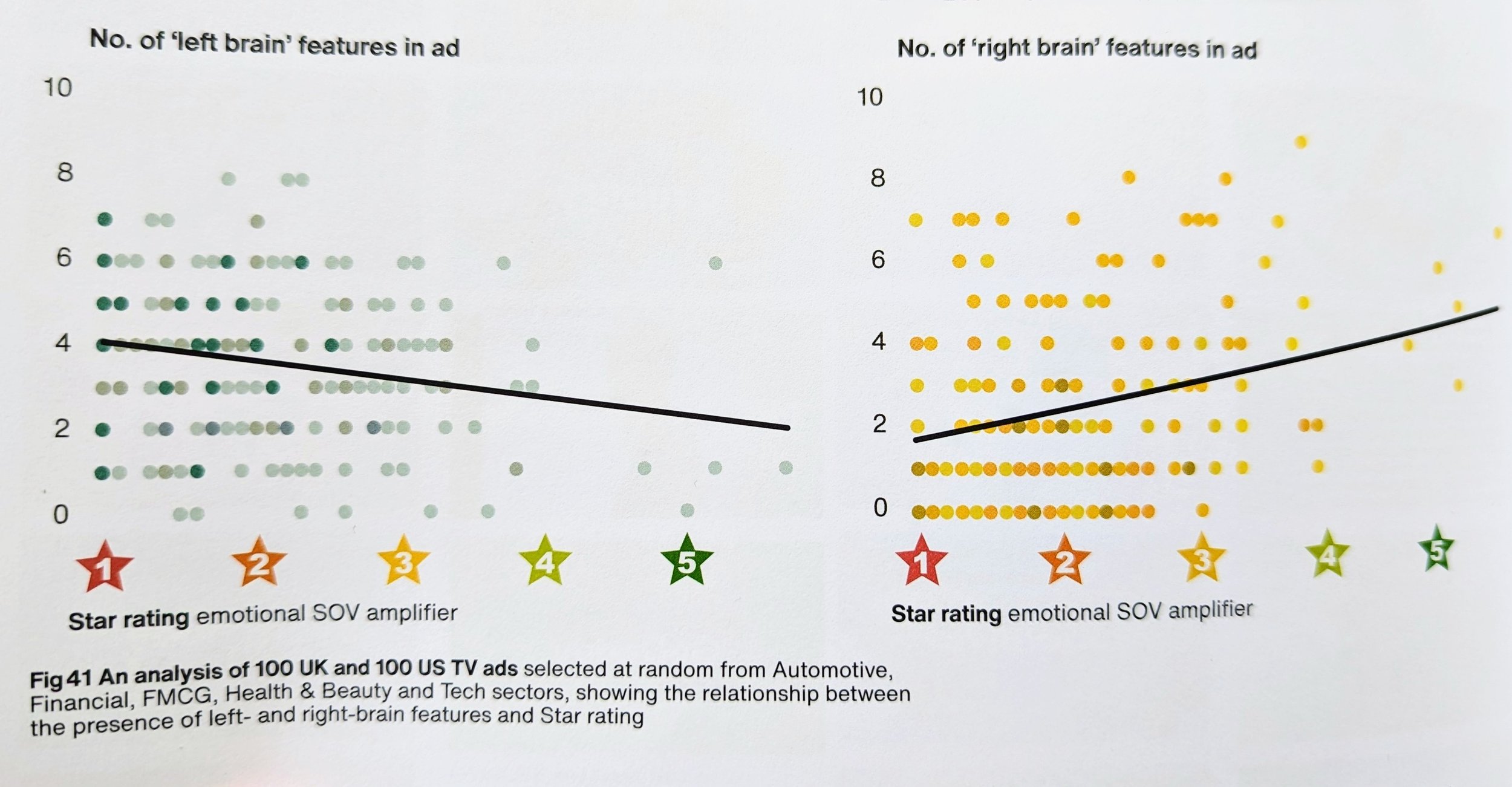
Absolutely yes. “Ads with more right-brain features have a clear advantage on the effectiveness Star rating* over ads with fewer right-brain features.”

The key here is entertainment. Ads that entertain, speak to the right brain, and make people feel something are proven to provide positive long- and short-term effects.

System1 analysed 200 TV ads (100 UK and 100 US) and found that those with more left-brain features proved more likely to achieve a low Star rating, whereas those with more right-brain features proved more like to achieve a high Star rating.

Illustration from Lemon showing the decrease in effectiveness of ads with more left-brain features than ads with right-brain features

Apologies for the image quality. I had to take a photo of the book then edit it and that was awkward

Remember that Cadbury’s Gorilla ad? “They said, ‘so you want to make an ad three times longer than a normal ad, that doesn’t feature any chocolate and there’s no message?’ It was the hardest thing [I’ve had to sell] in my career.”

Did it work? 10% sales boost says yes.

*The Star rating is a propriety system that predicts market-share growth

What now?

Well, that’s the question, isn’t it? We know what works and what doesn't. We know what we should be doing and what we shouldn’t be doing, but we’re all so hooked on measuring things that can be measured we can’t stop, and we’ve backed ourselves into a corner where all we can do is work that we're not proud of, and we know won't actually work. Is there a better way to kill creativity?

I hope that armed with the knowledge – and proof – that creativity and long-term initiatives positively impact the entire company, from fluffy ol’ brand reputation to sales and profit, we’ll have the courage to shift our focus.

I hope that being forced to abandon our traditional digital dashboards and tools will give us the kick up the collective arse we need in order to change how we use digital ads and how much reliance we’ve put on measuring the data we can so easily access.

I hope that we’ll stop obsessing over instant sales and performance ads and let long-term brand building have its day in the sun.

I’m starting to remind myself of the final five minutes of Shawshank Redemption, so I’ll stop with the hope. You get the idea. I’ll leave you with this quote from Orlando Wood that sums it all up nicely.

“For profit gain, speak to the right brain. Broad and long-term effects are associated with advertising that elicits happiness, that amuses, that leaves people awestruck, that plays to a connection with other people and the wider world.”

On second thoughts, I’ll leave you with this piece of creative genius that I still go and find on YouTube because it’s so goddamn entertaining.

OK, here’s another one, riddled with right-brain goodness. Remember the print ads? They were fantastic. I used to tear them out of magazines and put them on my wall. An ad. On my wall. I’m shaking my head right now.

The end.

Copyright © 2025, Lara Mulady. All rights reserved.