Prattle & Jaw

Two blogs about a whole lot of nothing

Things You'll Regret in Your 30s

A thread appeared on reddit a couple of weeks ago, entitled 'For those of you 40 or above, what do you regret about your 30s?Popsugar made a list of 11 out of the thread, which I thought was very good. I've no idea how they chose these 11 over the hundreds of comments, but there you go. I think these 11 are enough. I will, however, add a little anecdote. 

When I was in my early 20s, I worked at Starbucks. I loved the job but it was very much a temporary thing while I figured out what I wanted to do. The problem was, of course, that I had absolutley no idea what I wanted to do and I very often got panicky about it. It had been drummed into me from a very early age that you should know what you want to do. From the career talks we had at school when I was 13 (!) to GCSEs, A-levels and talking about university. It really scared me that I had no idea about it.

One typical morning, as I sat outside on my break enjoying a coffee and cigarette (there's a combination I miss), a regular asked if he could sit on the spare chair at my table. I said he could, and we began to chit-chat. We talked about Starbucks and London and life, and then he told me I seemed very happy here and it looked like I really enjoyed my work. I do, I told him, but it wasn't a job for life. He then asked me the question I dreaded but had really invited; what do you want to do? But I was honest, and said I had no idea, and that this scared me as I felt I should. Then he said something that had a huge impact on my view of things, and I'd even go as far to say my life. He said, "Don't worry. Don't even begin to worry about that until your mid-30s. Just don't worry." What struck me about this was that it was the complete opposite to everything I'd ever been told, and add the fact that this was a guy who I'd have pegged to be a broker or banker (I never did find out what he did), and there I was, dumbstruck. It might sound daft, but it opened a door. It let me not panic. It would come. I didn't have to have it all figured out at 21 years old. I was barely an adult. It would come. I wish I could somehow find him and tell him that I think of him often, and that he, as a regular in his local Starbucks had far more influence on a barista's life than he probably would ever guess.

But there you go. If you don't know what you want to be when you grow up, don't worry. You'll figure it out. Just don't worry.

The list below is directly copied from Popsugar.  

The shoulds

You'll feel societal pressures in your 30s more than ever before, but don't let the shoulds hold it back. You may constantly worry about how you should own a home, you should have kids, you should be married, or you should have a steady career. Drop all those expectations, and live life the way that makes you the happiest. Don't feel like a failure just because your life happens to deviate from the norm — you've got one life to live, so live it your way.

Not spending time with parents

One common regret that many people in their 30s have is not spending time with their parents while they are young enough to actively participate. Simple pleasures like taking a walk, traveling, or even having a conversation may be harder to come by once your parents age.

Putting work first

Something to keep in your mind in your 30s: if you put work first, you're going to regret it. Spend time with people you love, because those are precious moments that money and moving up the ladder can't beat.

Spending time on negativity

And you thought those negative people would disappear from your life in your 30s. Nope, there may be some hanging around, so don't waste time on them. Watch out for people who don't make you feel good about yourself, and reevaluate your relationships with them. Be careful of spending time on negative thoughts and issues that you have no control over. Just. Let. It. Go.

Thinking your 30s was old

"I'm too old for this!" may be a common phrase you use in your 30s. You know what? You're not. And I bet people in their 50s and 60s will agree. The world was your oyster in your 20s, and it still is. Take a chance, live, and enjoy life as the young'un you are, and never lose that child in you.

Not putting yourself first

Maybe you're putting everyone else first in your life but you. Snap out of it! Know that once you put yourself first, everything else can fall into place. Putting your needs first will make you a happy camper, which will result in better relationships — a win-win. When you take care of yourself, you'll have fewer regrets in your 30s. The partner your life revolved around? You probably won't regret that as much if you had focused on your needs and chased your dreams as well.

Not taking better care of your body

It's quite the paradox — you say you're too old for something, and yet you still keep the junk-food-fueled and antiexercise habits of the younger you. Those habits are harder to drop, but treat your body right early, or it'll catch up with you before you know it.

Not taking chances

Maybe you're overly cautious at this age and perhaps it's the shoulds we mentioned earlier that are holding you back. Don't play it safe, and live a little. Not saving and investing enough This seems to be a huge, huge regret that a lot of 30-year-olds carry. If you start saving earlier, you'll be reaping bigger rewards by the time you retire. And if you don't put off saving and investing in your 30s, you'll be more likely to retire at the age you want.

Not traveling enough

The world is at your fingertips, so take off on a travel adventure! Don't keep procrastinating and putting this off — it'll be harder to make time for travel as you get older.

Caring too much about what others think

It seems we're guilty of this at every age. Don't waste more time on this useless habit in your 30s. Stop investing time and energy into caring about what people who don't care about you think. The ones who do care for you will accept you as you are.

This picture has nothing to do with the article, but looks sort of deep and meaningful. And it's pretty.
12 Books Worth Your While

I've got some time on my hands so I thought I'd write a (what turned out to be very long) blog post about books I love. 

I've always thought of myself as a non-fiction fan, and generally speaking I am; the vast majority of my books are indeed of the non-fiction variety, but there is - obviously - some really, really good made up stuff out there. It took me years to really start to enjoy reading. It just never interested me. I was too busy outside and being noisy to sit still with a book, but at some point around 17 (not counting my rather heavy Sweet Valley High period), I started reading for pleasure, and, well, I still do.

I've always been interested in history and travel which might, to some extent, explain my preference for non-fiction. I find it far more powerful and personal to think back on an event or time that is documented and try to put myself there. That said, there are some fiction books that have blown me away, and they (three of them) are included in my list.

I'm not entirely sure what I'm trying to say here other than this selection might seem a little eclectic. I ended up at 12 just because that's the number of books that really made an impression - at least, they're the ones that I can think of now. These are the books that I've read more than once; that I gobbled up, desperate to turn the the page but reluctant to reach the end; that made me laugh out loud or made me cry; or that made me uncomfortable or scared. Basically, they all left their mark.

It's been hard but fun to whittle down the list. For a very long time, John Steinbeck's Grapes of Wrath was my favourite book. I've got a bit of a thing about America. Whether it's the history or just travelling through, the country fascinates me, particularly the Dust Bowl, the great depression and the American West.

The story of the Joads and the transition from the farming families being the backbone of America, to a spat-on group of worthless Oakies is heartbreaking, and the turning point of American from farming and 'the little guy' to major, brutish corporations just fascinates me. I found it to be a gutwrenching book that left a very long and lasting impression.

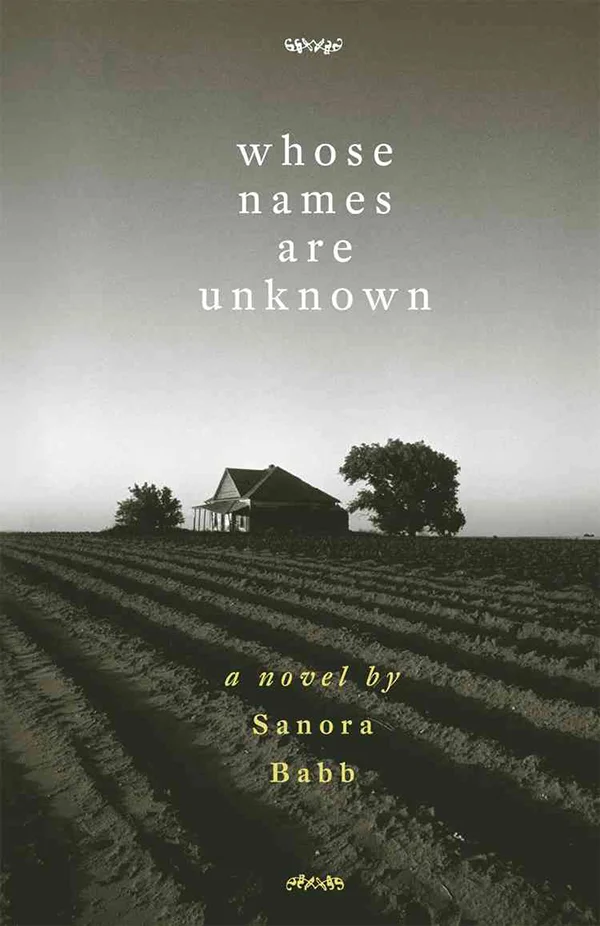
However, not too long ago I watched Ken Burns' documentary on the Dust Bowl (if you're even remotely interested in American history, Ken Burns is your go to guy - much of his stuff is on Netflix and he's currently working on a film about Vietnam), and in it was mentioned Sanora Babb and her novel, Whose Names are Unknown. To cut a long story short, she lent her first-person notes on the migrant camps, farming families, and Dust Bowl in general, to John Steinbeck, who then published Grapes of Wrath to huge critical acclaim (not to mention controversy, thankfully). Sanora Babb had to put her novel on the shelf, and wait and wait until a suitable time came for her to publish which was 45 years later in 2004.

I found Whose Names are Unknown to be far superior to Grapes of Wrath. It's more personal, more graphic, and far more shocking.

Paul Auster is another author I had trouble with. I've read almost all his books, yet the one that made the biggest impact isn't one he wrote, but edited. There are a number of his books that I love - really love - but if I have to be honest (and keep this list down to a reasonable size), I have to go with True Tales of American Life.

Anyway, enough talk, let's get on to more talk. Here we go - in no particular order:

Whose Names are Unknown

As discussed above, Whose Names are Unknown is a harrowing look at life in the Dirty Thirties, and a story of defiance, death, disease, and pride. We follow two families, the Dunnes and Starwoods, and get to know them intimately. Their lives, once filled with work, food and joy, are slowly stripped away, until they must choose between their homes - something so much more than just a roof over their heads - and heading further west to California in the hope there might be work, and thus life. We see how the lives of these families - and of course, of countless others - are turned upside down, shifting from successful, if modest, farming families, to diseased and starving fugitives, deserted by their government, treated like criminals by their countrymen, and reduced to begging and/or theft. It's a hard, thought provoking book, but is filled with love, and the bond of family. It might be fiction, but it's as based in real life as fiction can be. 

Whose-Names-Are-Unknown.JPG

Bury My Heart at Wounded Knee: An Indian History of the American West

This book made me want to curl up inside myself until I disappeared. I've never read anything that has made me so ashamed. The systematic extermination of all American Indian tribes is something that's can't be believed until read. The lies, the corruption, the murder and the hate dealt out to tribes across the country is sickening and unsurpassed, and I doubt if anything on the same scale will - can - ever happen again. As the new Americans push further and further west, they meet tribes whose land they want, and will have - no matter what. Countless deals are struck and broken by the Americans, whether it be through outright deception and lies, or ruthless government back-pedalling and u-turns, all of which leave the natives broken, starving and in the end, eager for revenge.

Today, pushed into reservations long ago, Indians are still treated as second class citizens. It's impossible to wonder what might have happened if only the white man had respected the natives. A heartbreaking book about a proud and beautiful people.

Wave: Life and Memories after the Tsunami

The 2004 Boxing Day Tsunami was horrific. Sonali Deraniyagala, Sri Lankan born and British wed, lost her husband, her parents and her two sons to the tsunami in a single devastating moment. What scared me the most was that there was never a moment of separation - they weren't all huddled together when the wave hit, they were all doing their own things, in their own rooms, and outside. It just happened, and there was absolutely nothing she could do about it.

It's hard book to read. It feels immensely personal, which of course it is; what gives us the right to look inside the heartbreak, pain, and anger of this woman? I still don't know how she survived, not so much physically, although that too is something of a miracle, but mentally. How she went back to the UK and coped with friends and with a world that just kept on moving, I just don't know. It's our worst nightmares made real, and an inevitably uncomfortable yet riveting read.

World War Z

Ah, zombies. That's a bit more like it. Now if you've seen the film, forget it. It's got nothing on the book.

Set after the war, the book is split into interviews, each with a different person, and each offering a new perspective and experience on the war. It's extremely well written, and quite different from your average zombie tale in that while it does have an overarching storyline, it tackles this with the individual stories, giving the book a far more effective and powerful narrative.

Far from the Hollywood spew featuring Brad Pitt saving the world, World War Z is  tale of desperation, human mistakes, shady governments, and politics. An absolute must for any fan of zombies (and fans of great books).

Forgotten Voices of The Somme

There are many Forgotten Voices books (a series made by The Imperial War Museum), and to be perfectly honest, I'm not completely sure if this is the one that left the biggest impression on me. They're all horrific war stories held together by tales of friendship and brotherhood. All the books are direct transcripts of interviews with people who survived the 20th Century wars in which the British were involved, and all bring home, with remarkable frankness and in some cases humour, the reality of war.

I find the stories told overwhelmingly emotional, particularly, of course, when they talk of fallen friends. To hear these men talk about what they saw, what they did and why they did it, is shocking and humiliating. Any of the series is well worth checking out.

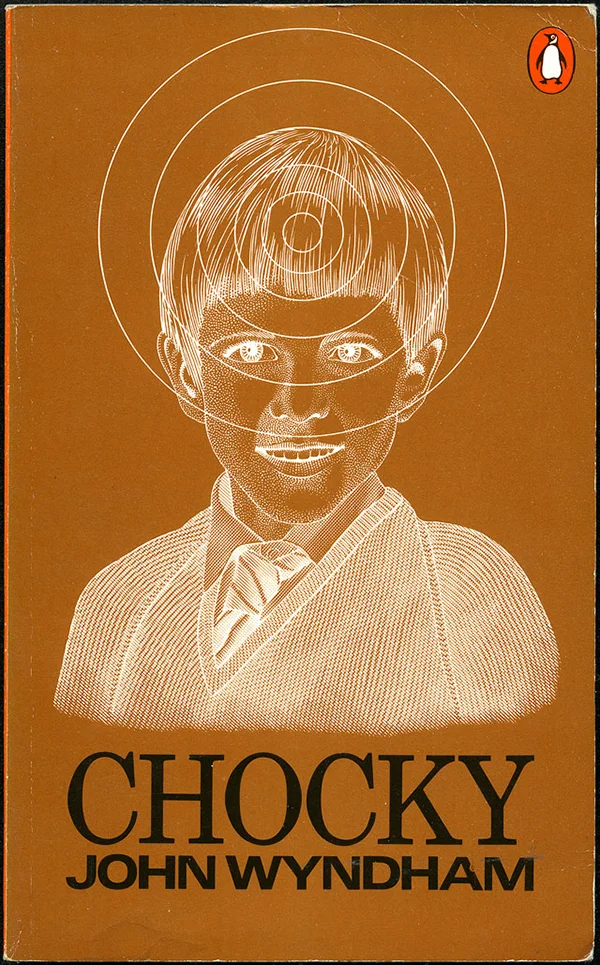
Chocky

I'm a huge John Wyndham fan, and had a hard time picking between his books, but I think - think - I've got it right with Chocky.

The book is written from a father's perspective, and centres around his son, Matthew, who starts to have an imaginary friend. It soon becomes obvious that the imaginary friend is far more than what he appears to be. I'm not sure how much to say as I don't want to spoil it, suffice to say it's a little bit sci-fi, and a little bit slow churning drama. The fact that it doesn't end with world dominance or intergalactic war is what makes it stand out, and the innocence of Matthew makes it quietly terrifying.

Like most of his books, read now it's also unintentionally funny. The sexism and some of the language is just fantastic. 

Chocky.jpg

True Tales of American Life

Paul Auster. Hard to find his best, ended up with one he didn't write but edited. Perhaps not strictly fair, but then again, it'd be impossible to pin down an author as the book is made up of stories written by everyday Americans.

In 1999, Paul Auster was asked to contribute stories to the National Public Radio, but instead decided to ask the American public to contribute their stories. The only requirements were that the stories were true, and that the writers were not published authors, thereby guaranteeing a genuine glimpse into the average - and not so average - American's life. The result is a beautifully varied collection of 180 short stories, some truly heartwarming, some truly heartbreaking, and some written clearly just for the hell of it. Thanks to the short story format, it's a very easy read, but it's also quite exhausting in an odd way; it's people biggest moments, their saddest moments, their happiest moments, and their burdens and grief, one after the other after the other. I'm not sure why it touched me so much. I think it's the same simple reason I prefer non-fiction; it's real life. How much more honest, lovely and sad can you get?

On Foot Through Africa

This book was one of the first books that ever really got to me. The short story is that Ffyona Campbell was walking around the world. She was done with the UK and America, and now, in this book, she tackles Africa - by far the hardest section - before she goes on to do the rest (she also has books about the other continents too).

I don't know where I got this book, but I do remember being blown away by it. She doesn't just talk about the continent and its people, she also talks about her inner struggles, her life, her childhood, and the emotional barriers she had to overcome to complete the walk. When you walk 9,900 miles, you've got a lot of time to dig deep. It's a book to make you think. It made me look at myself, and examine what I thought I wanted, who I thought I was, and how I thought I should be. I don't know if it made such an impact on me just because of where I was in my life, and to be honest I don't care. It gave me strength, hope and a belief that everything would be OK, and I've always, always wanted to thank Ffyona for that.

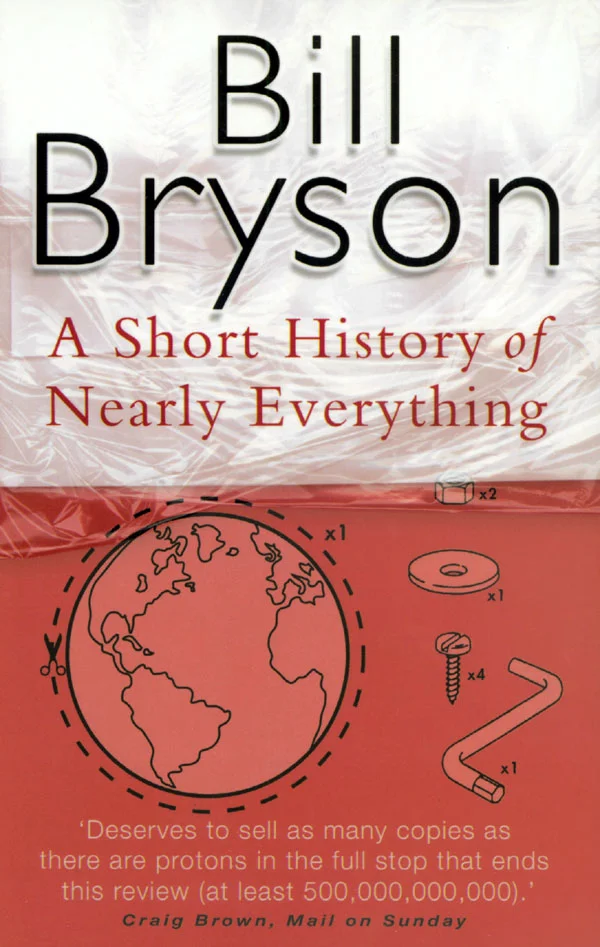
A Short History of Nearly Everything

Ah, Bill Bryson. Two of his books are on my list, and it's a wonder there aren't more. This one is a little different to his usual ramblings (which they sometimes literally are), but is so fascinating, and so chock full of information, that it surpasses almost all his others. In fact, this is probably one of my top two favourite books of all time. I have the paperback, the illustrated hardcover, the Kindle book, and the audiobook, and I still pick it up for a quick read.

Bill Bryson takes us from the beginning of space and time, up to present day, well, 2003 or thereabouts, covering atoms, quarks, the atmosphere, ice-ages, Darwin, Einstein, Hubble, cells and lots of other things that are all too easy to make boring. If you've ever read his books, you'll know he can be very, very funny, and he certainly doesn't shy away from comedy in science, which is probably why I like it so much. He manages to talk science in an everyman language, making the dull, fascinating, and the ungraspable, understandable. For example, on the size of the solar system, "Even if you shrank down everything so that Jupiter was as small as the full stop at the end of this sentence, and Pluto was no bigger than a molecule, Pluto would still be over 10 metres away." Ah...science. It's magic.

A-Short-History-Of-Nearly-Everything.jpg

A Walk in the Woods

My other Bill Bryson book on this list is this. I've read almost all his books, but it's this one that stands out in my mind, all thanks to one occasion. I was sat in a typically full and silent carriage on the tube, reading this book, but kept having to close it because it was so funny. All I could do was concentrate on not laughing, but of course I could still feel my shoulders shaking. At some point, I got myself under control. It was the funniest, but hardest, tube ride I've ever had.

Anyway, like most of his books, this is a travel book, but also something of a memoir, and a very funny one to boot. In short, he and a friend decide to hike the Appalachian Trail, no small feat considering that it's around 2,200 miles long (a walk in the park for our Ffyona). They give up quite quickly, but continue to hike bits of it over the years, and Bill Bryson relays anecdotes and stories about the trip, as well as more serious scientific and ecological titbits. As with almost all of his books, certainly the travel themed ones, I find it hard to put into a category. You'll find it under travel in your bookshop, but it's so much more than that. They all are. He's written on Australia, the UK, Europe, and Africa, as well as books on language, history and of course, science. Every single one of them is funny. You can't go wrong, but maybe start here.

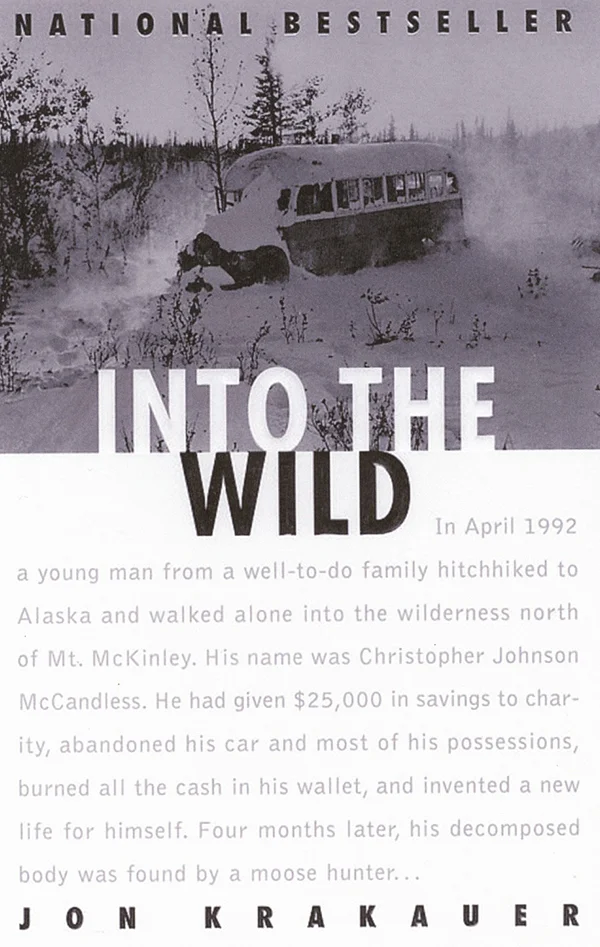
Into The Wild

This is another book that is on this list due to, I suspect, when and where I read it, but it's my list so there. In the summer of 1999, my best friend and I drove from New York to San Francisco in an old (very broken) third generation Ford Econoline. While in Washington, we ran into a bookshop to shelter from a huge downpour, and with nothing else to do but browse books, I - completely by chance - came across Into the Wild.

It's the true story of a man's lone adventure, and seeing as I was on my own adventure, I thought it sounded good. And good it was. You might have seen the film, which - for once - does a very good job of translating the feeling and the emotion - but if you haven't, here's a brief summary. In 1992, Chris McCandless abandoned his worldly goods and comfortable lifestyle, and walked into the Alaskan wilderness on what could have been a spiritual journey, or one of enlightenment, but certainly one of personal growth and adventure. Four months after he set off, his body was found in a derelict bus. Arguments go back and forth about whether he was some kind of new American hero or just a dumb kid, but for me, that's missing the point. This is a book about a journey to find what's important, to be with yourself long enough to get to know yourself, and to shed all the useless excess we accumulate over the years.

My road trip at the time, while by no means as drastic and lonely as Chris', was a turning point and incredibly important time in my life, and this book was the perfect accompaniment. It's a sad but beautiful tale of finding this world a little too much, and an attempt to find out what really matters.

Into-the-wild.jpg

The People of the Abyss

Ah, the last book. People often forget - or simply don't know - just what a state London was in pre-war. It was a shit hole, to be honest. In some cases, it was a literal shit hole. Written in 1903 by Jack London, widely known for White Fang and The Call of the Wild, The People of the Abyss studies life in the East End in 1902, and is written as a firsthand account.

Jack London spent several months living in workhouses or sleeping rough, talking to and living with the people confined to slums. The conditions he describes are incredible enough, but what is perhaps even more shocking is the fact that this is London - the city at the epicentre of what was then the greatest empire on earth. Dirt, disease and death are rampant. You'll never look at London - and perhaps England - in the same way, that much I can all but guarantee.

So there you have it - my 12 books worth your while.

I hope that you'll check one or two of them out next time you're thinking of something new to read.

In Defence of CrossFit

Despite wanting to write this post for a long time, I’ve only just sat down to begin now. The reason? Rebecca Adlington. Specifically this letter to Rebecca from Laurie Penny.  For those of you who don’t know, Rebecca Adlington is a retired Olympic swimmer. She won two gold medals at the 2008 Olympic Games and two bronze medals at the 2012 Olympics in London. She, together with Katherine Grainger, is Great Britain’s most decorated female Olympian. Basically, she’s incredible. But In 2013, she went on ‘I’m a Celebrity...Get Me Out of Here!’, and thus went from a role model and national treasure, loved and held in high regard by the British public, to a victim of narrow minded, shallow internet trolls.

Rebecca-Adlington.jpg

Rebecca Adlington

In I’m a Celebrity, she starred alongside beauty model Amy Willerton, and the public, being the fickle mass it so often is, saw this as an opportunity to compare the two, and bully, tease and taunt Rebecca from behind the safety of a computer screen. Granted, as she said, she has always struggled with her self esteem, and being around a bikini clad model 24 hours a day certainly didn’t help. She even admits to being concerned about her looks at the Olympics, worrying that people would judge her on how she looks rather than her performance.

In Laurie Penny’s letter to Rebecca she says, “By the way, Becky, you're beautiful. I'm not sure if I should say so, because the whole point is that whether or not a woman is good-looking should not determine her value as a person. No, you don't look like a catwalk model, and you never will, and if you did you probably wouldn't have had the success you've had as a swimmer. But I happen to think that your strong, powerful athlete's body is desperately sexy, and I'm sure I'm not the only one.”

Talking about strong women is something I’m seeing more and more of. Yes, it’s probably because I like a lot of CrossFit pages on Facebook so articles pop up in my feed relatively regularly, but it doesn’t matter if they’re all written by CrossFitters; what matters is that the common understanding of what ‘feminine’ is, or what a woman should look like, is being challenged. We’re seeing more physically strong women than ever before.

We’ve been told for decades that women with muscles 'look like men' or are unattractive. There’s too much ‘why would they do that to themselves’, or ‘they don’t look like real women’ going around. I’m not sure what a ‘real woman’ is, and I presume that women ‘do that to themselves’ for exactly the same reason that men ‘do that to themselves’. CrossFit isn’t just about muscle though, it’s about fitness; running, swimming, weights, rowing - you name it, CrossFit does it. And it’s also not just about fitness; it’s about community. It’s about fun, admiration and acceptance.

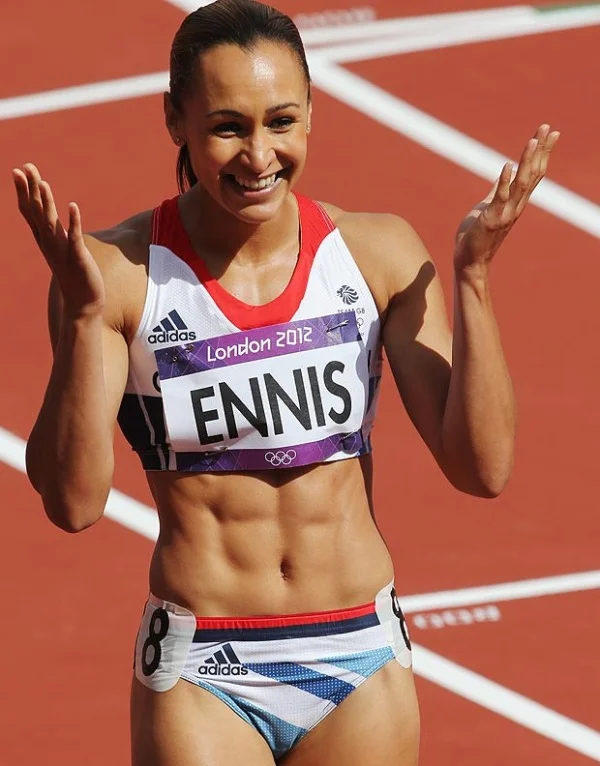
Jessica-Ennis.jpg

Not me, unfortunately, but Jessica Ennis

For me (and I’d be curious to know if this is a common view) it wasn’t until the London 2012 Olympics that the tide really began to change towards women and the athletic body (let’s face it, people put Sporty Spice in a box). Perhaps it was down to Jessica Ennis, our great medal hope and the woman on whose shoulders London 2012 rested. She delivered, and we loved her for it. Suddenly, her incredible, athletic body was everywhere. She was sporty, she was beautiful and she was British. Suddenly, being a woman who was into sports didn’t automatically slap labels on you. So what went wrong with Rebecca? As far as I can tell, it’s because she has a swimmer’s body, i.e. broad shoulders and more bulk than Jessica. She doesn’t fit into the box -  which Jessica does more so - despite her body and sport.

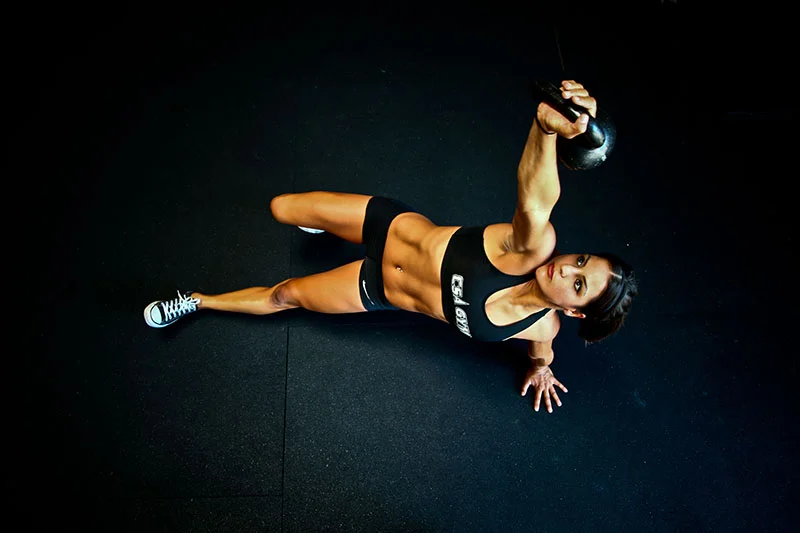
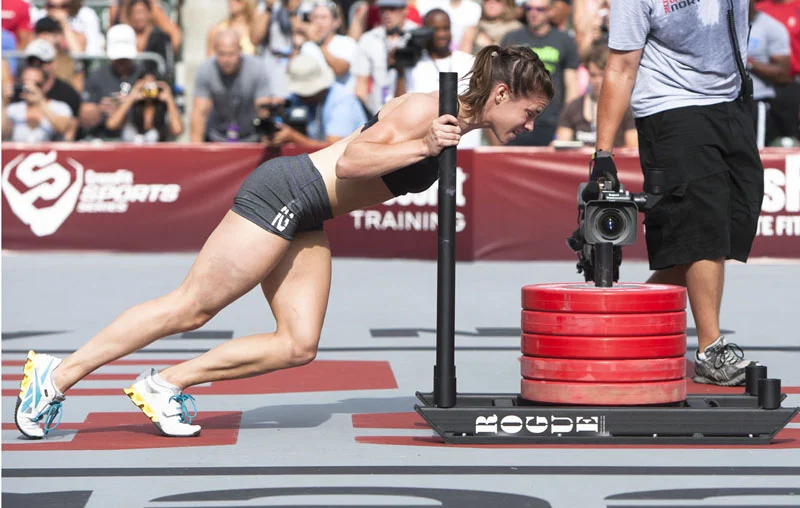
It was around this time I began CrossFit. I was pretty much hooked straight away. I began to follow groups and pages, and other online communities. There was a sense of community I had never experienced before and a completely sense of respect between everyone - no matter what country, age, sex, religion, or race. You go to a CrossFit class to get fit. End of story. I began to see incredibly fit, athletic and muscular women who were (are!) absolutely beautiful.

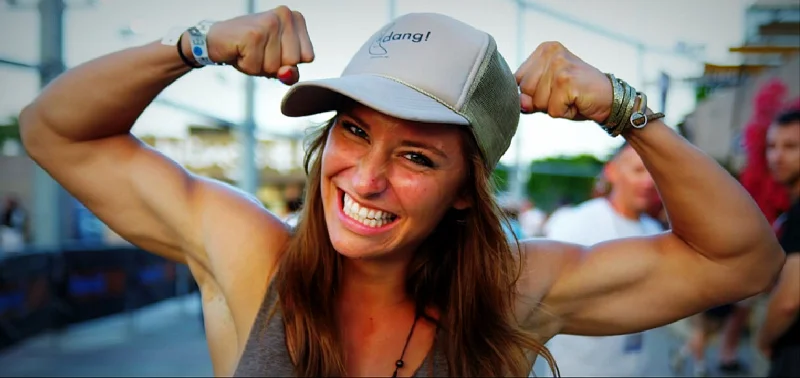
Andrea-Ager.jpg

Andrea Ager

I began to read articles about the CrossFit woman, like this great paragraph, “Crossfit has created a breed of women who aren’t afraid of lifting weights, or getting out of breath. A woman that doesn’t mind chalk under her nails, and her calluses and bruised shins are proof of her strength, determination and fitness. She knows the names of all the Olympic lifts and doesn’t need a man’s help to put her bar back into the rack, or anything else for that matter. Crossfit has taken down the “reserved” sign and opened up a third option for women who have decided that skinny, frail and nymph just isn’t their body type. Welcome to the world of the Crossfit chick: mum or student, professional or labourer, young or old- athletes.” Or this; “Something amazing is happening around the world! The eyes of women (and men) are being opened to the elephant in the room when it comes to women and their body shape, ability and strength, and for this Crossfit should be exalted.

Jackie-Perez-small.jpg

Jackie Perez

I began to follow online communities where people share their thoughts, their worries and their progress, and watched as everyone in the community rallied around them, gave advice, encouraged and congratulated them. I started to see - and am still seeing - more and more women, proud of their strength, or starting out, curious about what their bodies can do, eager to leave their heels in the changing room and sweat it out, climbing ropes, throwing wall balls, and gasping after countless burpees. It is, to be frank, liberating.

So it angers me when I read articles that dismiss CrossFit as a dangerous fad, a form of exercise that promotes injury, and even liken it to cockfighting. What these people fail to realise is (among other things), that within any sport - even bricklaying - are idiots. These range from those people who pump themselves full of steroids, to those people who don’t listen to their body. Now this is a whole other debate, as I know that in order to push past your best weights and times, you have to push yourself. Personally, I’m not out to compete, and while I do enjoy beating my personal best, I will always put my health first. I think that goes for most people - regardless of what sport they do. The people who push themselves so far that they fall prey to Rhabdomyolysis have only themselves to blame, most certainly not CrossFit, and despite what you read, Uncle Rhabdo is not a mascot.

Julie-Foucher-small.jpg

Julie Foucher

They are right about one thing though - CrossFit is just another sport. I’ve never been involved with any other sport outside of school, but I should imagine that there are communities just like those of CrossFit all over the world, where people are kind, supportive and love what they do. They might also promote women's involvement. I hope so.

I hope that when the next generation gets to my age, strong women aren’t a taboo. That women like Jessica Ennis and Rebecca Adlington are seen as the beautiful, athletic women they are, no matter what their body shape. 

Copyright © 2025, Lara Mulady. All rights reserved.